 This is the story of two friends whose lives touched during the turbulent years of WWII. Nina and Gordon were both born in 1938 at Mercy Hospital in the San Joaquin Valley town of Merced. Their story begins in this quiet idyllic setting of rural California as storm clouds gather on the near horizon.
Nina’s father was a lieutenant in the U.S. Army Air Corps, her mother a teacher in a local elementary school. Following the bombing of Pearl Harbor her father was sent to training billets across the country before ultimately being stationed in England.
Nina’ story relays the disrupted life visited upon millions of families of servicemen because of the war and the measures mothers across the country took to keep the family together and protected with some semblance of a normal life. They traveled by train to be near her father during his training before he shipped out overseas. When he departed for England they returned home to live out the war with her grandparents.
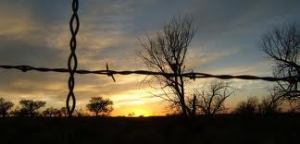
Gordon’s parents were well-known farmers in the area. His father was a Japanese immigrant married to an American-born daughter of Japanese parents. Because of Pearl Harbor his family experienced a major upheaval when they were forcibly evacuated from their family-owned farm and interned in a concentration camp in Southeastern Colorado. His story encompasses the disruption caused by the evacuation, the humiliation of being identified as enemy aliens, and the weight of what life was like surrounded by barbed wire fences and guard towers. In addition to dealing with such life-altering changes they faced working through the minefield of racial prejudice during the time of war.
Nina’s and Gordon’s stories involve brief narratives of specific events, remembered conversations, and interactions with influential people in their lives. These are supported by their own memories, saved letters and memorabilia, photographs, and stories as related by family members. As would be expected in the 72-year lapse from war’s end to the beginning of this project there are gaps in the recalled histories and time has faded other elements of their recollections. Some of the remembrances are sharp and true to the original experiences. Others while not true factually are in proximity to remembered events.
Two Faces is presented in the format of a memoir, but because there is a mixture of factual events and experiences alongside some “close shots” we are considering this a fictionalized memoir, something as close to the events as memory and constructive thoughts can construe.
With this as background the authors made two major changes in the factual narrative of our combined story lines: At the urging of our editor we changed the timing of when we initially knew each other from the true time during high school to when we were second graders, this in order to have a relationship already in play when the bombing of Pearl Harbor occurred. We also changed our age from four years old at the beginning of the war to age ten. We elected to make these alterations in order to expand the pool of our life experiences and broaden the consciousness level from which to draw in our narratives. Our intent was to give our memoir a richer mindfulness of the emotions and thoughts running through our lives as we struggled with growing up in an atmosphere of a world gone mad.


 Journeys of a Bent Mind