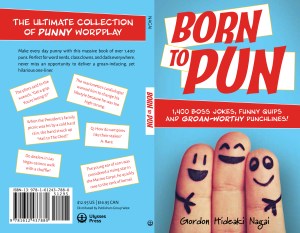
 Born to Pun: 1,400 Boss Jokes, Funny Quips, and Groan-Worthy Punchlines
Introduction
Words, words, words!
Is a picture as the Chinese saying goes worth a thousand words? And is the reverse also true,
that one word is worth a thousand pictures? What is one word worth? Would William Wordsworth have wondered the same?
Words are the portals to a realm within each of us where dwell creatures monstrous and terrifying and others delicate and wondrous and universally healing. It is a world as children we had ready access to and where we spent lengthy periods in active make believe. It is also the cauldron where dreams and spirit and all creativity are born. It is where the fires of valor are stoked that enable us to rise to and, when need be, reach beyond our limits. And it is because of the nature of words that this world is opened.
Then enters the artist as dream weaver: from that first creative soul who daubed pigments and charcoal images on the walls of caves to those who ever beat out the tempo to which they alone march, they are the bellwether of the race. They give us a window onto our past and intimations of our future. Is it any wonder then that they have strummed the rhythmic chords within us that cause us to dance?
Whether it is with words conjured by writers to climb the battlements of the mind, or the mixing of color and light and darkness with pigment and lens to stimulate the world of sight, or the voice raised to the vaulted heavens, the touch of fingertips upon taut strings, or the beating of timbrel and hide, all artists hold the keys to this realm of wonder and intrigue. It is well for us to heed the call of artists lest we arrive after the train has left the station.
It is said that puns are an art form, though it is in our cultural parlance generally considered the stepchild of real art. However, it is considered by others to be the most sophisticated of the arts, and is available to and accessible by anyone with a fair degree of mastery over language. That an immigrant with only rudimentary skills with English can enjoy puns speaks to its powers to excite.
And it doesn’t require genius to generate puns, only a grasp of language and a willingness to suspend the lockstep rules of language and meaning and to risk wonder and the unexpected.
There is a fascinating word for all this: Paranomasia, the use of words to make puns. Thus a paranomasiac is one who loves and conjures puns. And in our more free moments it doesn’t take anything to consider that puns are an acquired taste that has to have groan on you over the years. (Sorry! I couldn’t help myself!)
The jokes and puns, the dad jokes, in this volume are the fruits of a bent mind, one with its roots in that early childhood realm of make believe. It was sheltered within and closeted as I grew through my teen years and into becoming an adult. While others in growing up left this world behind I clandestinely kept contact and nurtured it, spending time in reverie as most introverts do unbeknownst to the others around them.
It is with pleasure that I present these groan-worthy tidbits for your consumption. If I am able to elicit the rolling of your eyes or the slapping of the forehead with a stifled smirk, I have accomplished my mission here.
Whatever your idea of how the world works, or should, enjoy your stint through this mind field of Cracker Jacks prizes.


 Journeys of a Bent Mind