 In the summer of 1961 Barbara and I traveled to Japan with a group of students at the Wesley Foundation Methodist Student Center at the University of California in Berkeley to work with a partner group of students from the Kansai Gakuin University in Tokyo, Japan on an international work project to foster international relations. We were in Japan for 9 weeks, during which we worked on the beginnings of a bakery building for a Christian group home serving disabled women in Tokyo, and the preliminary stages of construction of an outdoor amphitheater for a church camp in the hills outside Osaka.
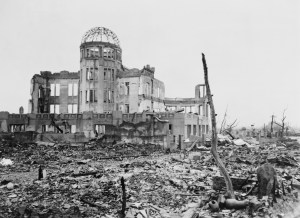
Our stay in country overlapped the beginning part of August, and we went with our Japanese student hosts to Hiroshima on August 6th, the anniversary date of the atomic bombing of the city in 1945. The memorial ceremony began at 8:15 AM with the release of hundreds of pigeons symbolizing the moment of the explosion over the city. We participated in the observances throughout the day, visited the Atom Bomb Museum on the site, and later visited the U.S. Atom Bomb Hospital providing free healthcare and follow-up to all survivors of the bombing suffering residual effects of radiation and the blast. All of this was most enlightening and sobering and we all came away profoundly affected by what we witnessed and overheard during the day.
Because Hiroshima was the birthplace of my father, Ben Noriaki Nagai, Mom and Dad were in touch with his family and arranged for Barbara and me to meet with Dad’s elderly cousin during our time in Japan, and as it turned out over the weekend of the memorial anniversary.
Dad’s cousin was an elderly grandmotherly type who reminded me of Bachan, my grandmother. She came with a back-up cadre of grandchildren who served as interpreters in that I spoke no Japanese and needed translation of everything that transpired and she spoke no English. She remarked early on that I looked just like my Dad when he was my age, which touched me in the moment. My memory of all we talked about is lost in the mists of time, but it was in the moment rewarding talking and being with her, even though it was through interpreters. At one point it came to my attention that she actually spoke some English, and we came to learn that she had spent 3-4 years living in Idaho and spoke rudimentary English. Here we had spent the better part of over two hours conversing through her interpreter grandchildren and she spoke English. Her reasoning for deferring with her English was because she was embarrassed she spoke the language so poorly. I was even more embarrassed that I didn’t speak Japanese at all, and would have been fine with her English. Sadly, our schedule didn’t permit us to spend more time with her to speak in a common language, a loss for us both for sure.


 Journeys of a Bent Mind