
Jack Riemer, Houston Chronicle: February 10, 2001~
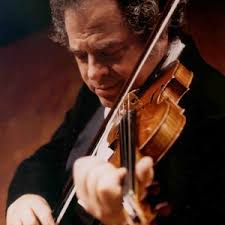
On Nov. 18, 1995, Itzhak Perlman, the violinist, came on stage to give a concert at Avery Fisher Hall at Lincoln Center in New York City. If you have ever been to a Perlman concert, you know that getting on stage is no small achievement for him. He was stricken with polio as a child, and so he has braces on both legs and walks with the aid of two crutches. To see him walk across the stage one step at a time, painfully and slowly, is an awesome sight. He walks painfully, yet majestically, until he reaches his chair.
Then he sits down, slowly, puts his crutches on the floor, undoes the clasps on his legs, tucks one foot back and extends the other foot forward. Then he bends down and picks up the violin, puts it under his chin, nods to the conductor and proceeds to play. By now, the audience is used to this ritual. They sit quietly while he makes his way across the stage to his chair. They remain reverently silent while he undoes the clasps on his legs. They wait until he is ready to play. But this time, something went wrong. Just as he finished the first few bars, one of the strings on his violin broke. You could hear it snap – it went off like gunfire across the room. There was no mistaking what that sound meant. There was no mistaking what he had to do. People who were there that night thought to themselves: “We figured that he would have to get up, put on the clasps again, pick up the crutches and limp his way off stage – to either find another violin or else find another string for this one.” But he didn’t. Instead, he waited a moment, closed his eyes and then signaled the conductor to begin again. The orchestra began, and he played from where he had left off. And he played with such passion and such power and such purity as they had never heard before. Of course, anyone knows that it is impossible to play a symphonic work with just three strings. I know that, and you know that, but that night Itzhak Perlman refused to know that. You could see him modulating, changing, re-composing the piece in his head. At one point, it sounded like he was de-tuning the strings to get new sounds from them that they had never made before.
When he finished, there was an awesome silence in the room. And then people rose and cheered. There was an extraordinary outburst of applause from every corner of the auditorium. We were all on our feet, screaming and cheering, doing everything we could to show how much we appreciated what he had done. He smiled, wiped the sweat from this brow, raised his bow to quiet us, and then he said – not boastfully, but in a quiet, pensive, reverent tone – “You know, sometimes it is the artist’s task to find out how much music you can still make with what you have left.”
What a powerful line that is. It has stayed in my mind ever since I heard it. And who knows? Perhaps that is the definition of life – not just for artists but for all of us. Here is a man who has prepared all his life to make music on a violin of four strings, who, all of a sudden, in the middle of a concert, finds himself with only three strings; so he makes music with three strings, and the music he made that night with just three strings was more beautiful, more sacred, more memorable, than any that he had ever made before, when he had four strings.
So, perhaps our task in this shaky, fast-changing, bewildering world in which we live is to make music, at first with all that we have, and then, when that is no longer possible, to make music with what we have left.


 Journeys of a Bent Mind