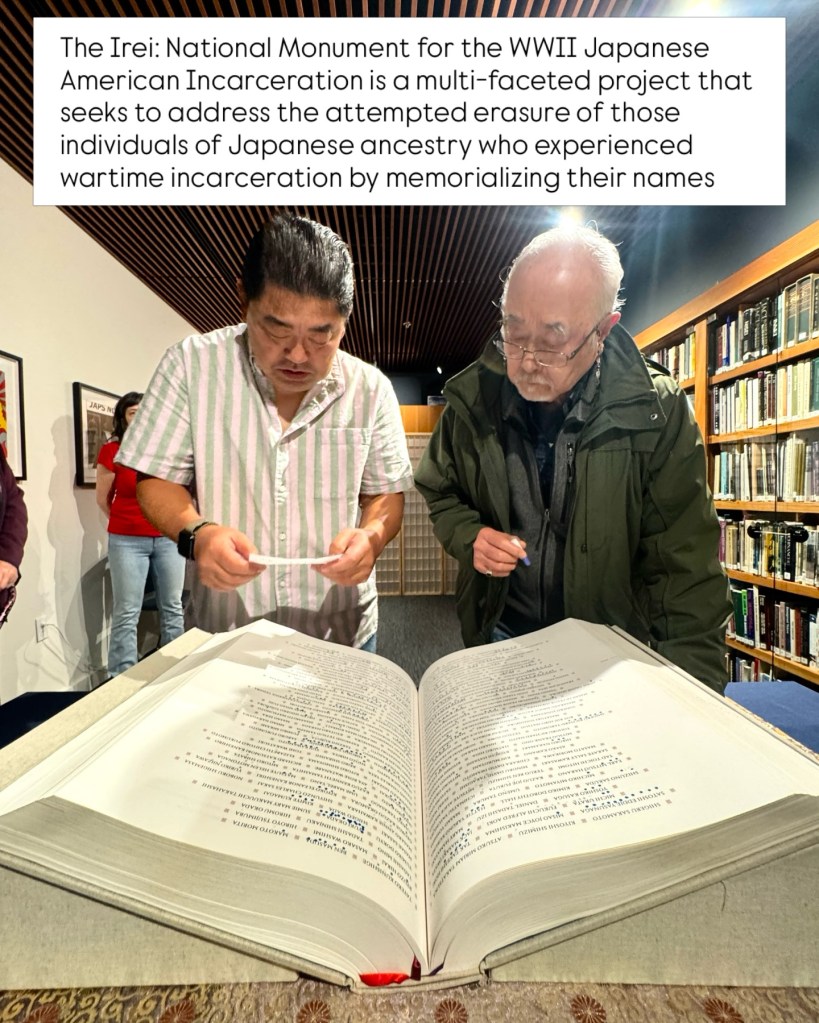
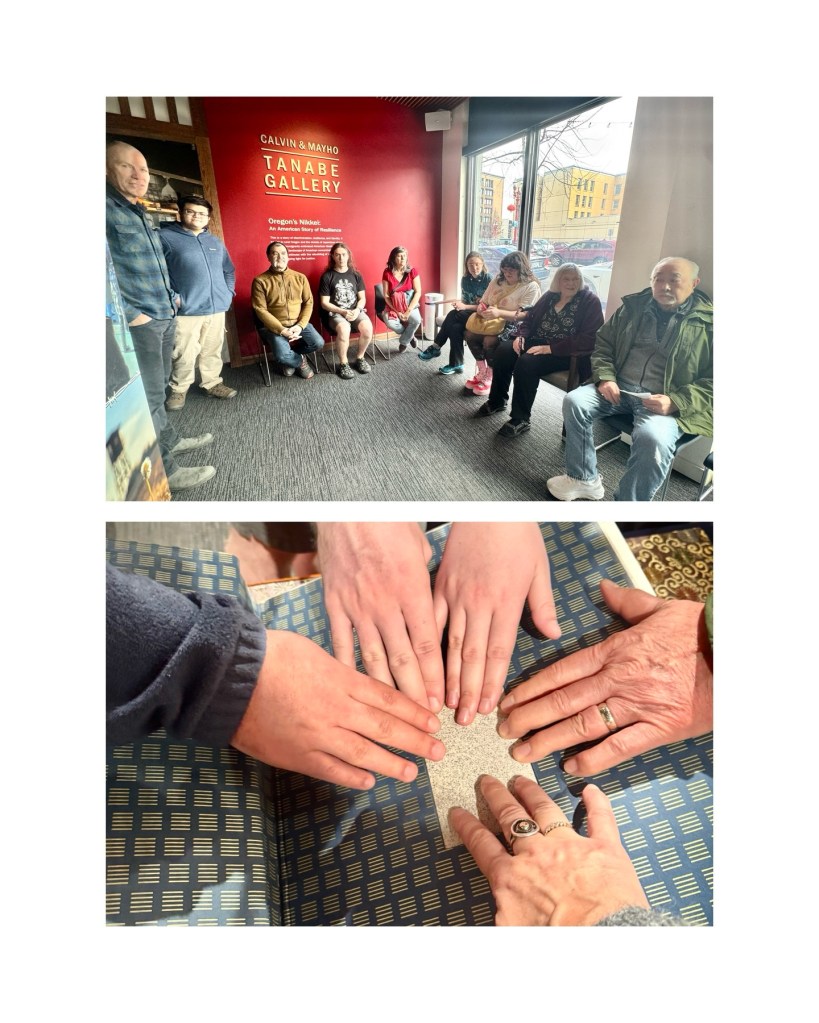
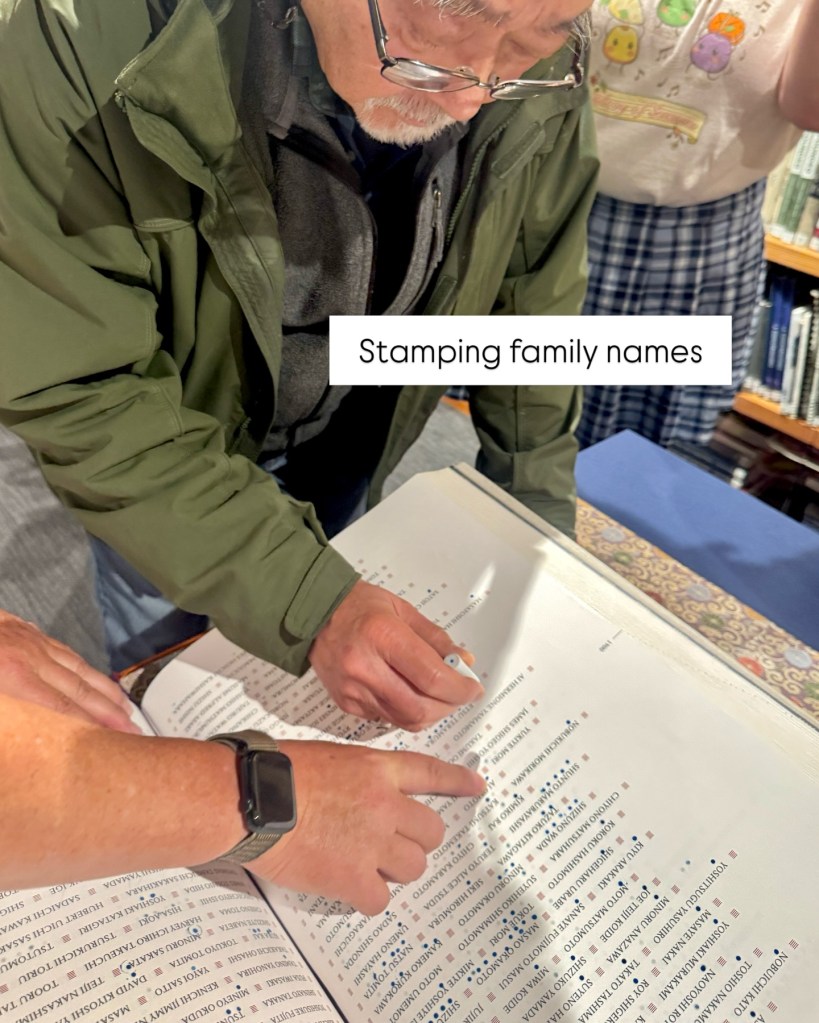
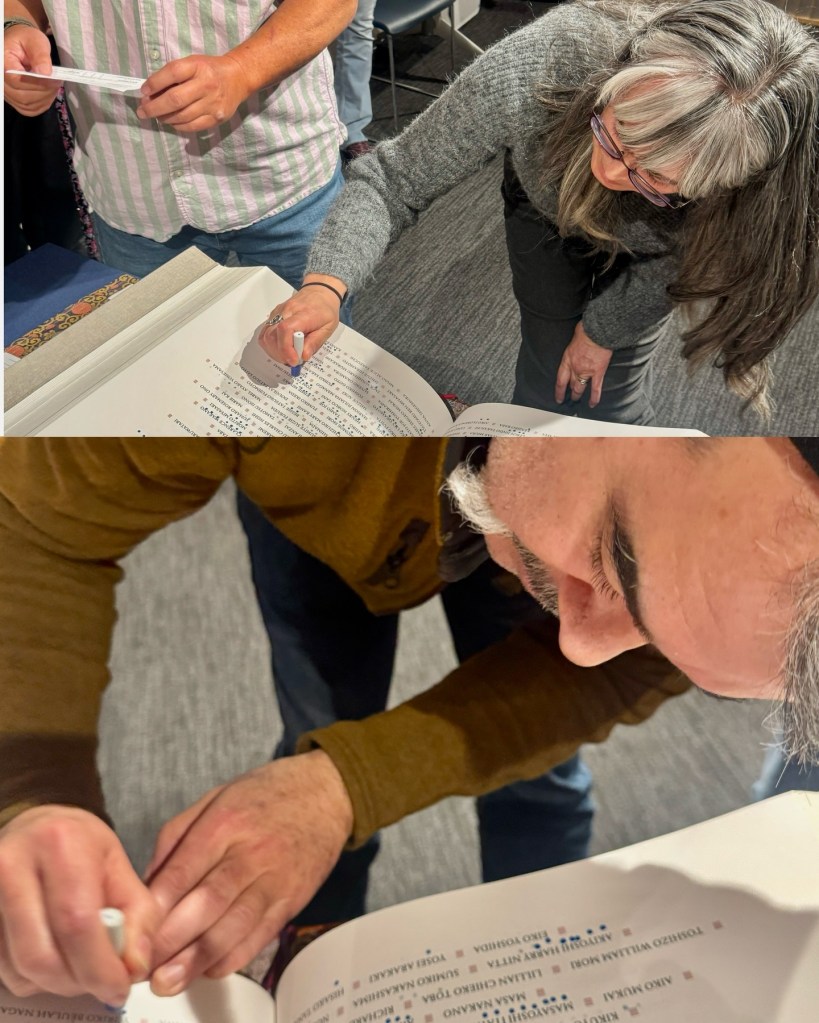
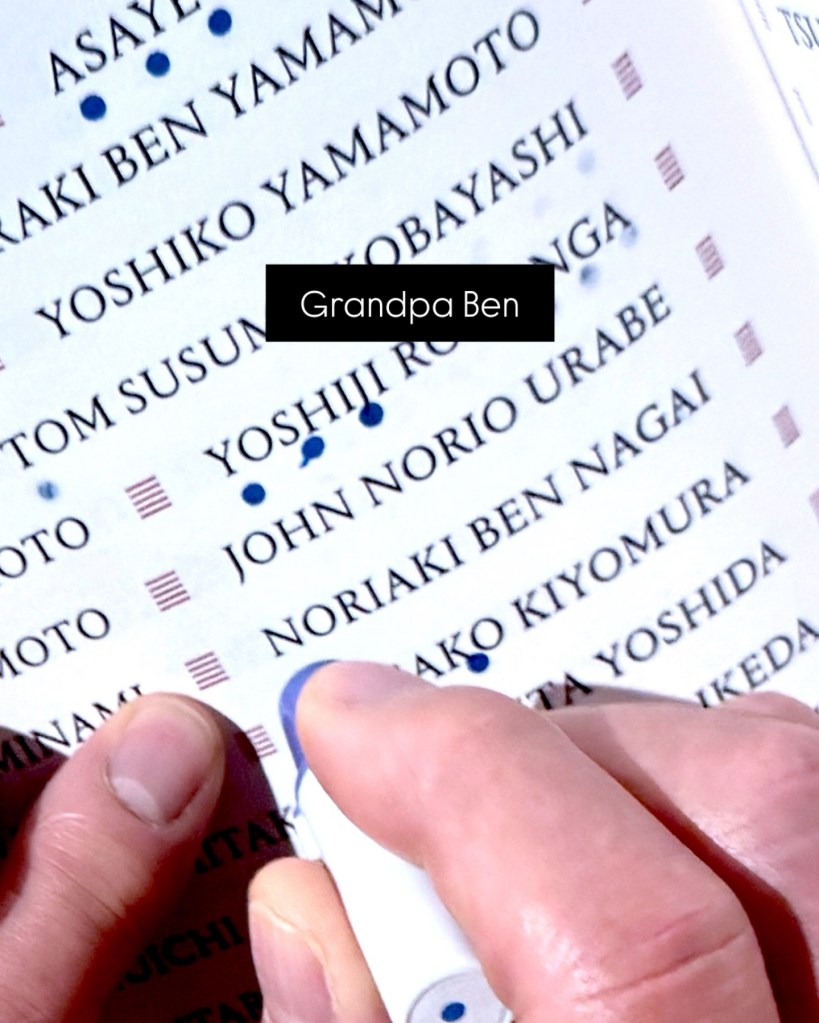
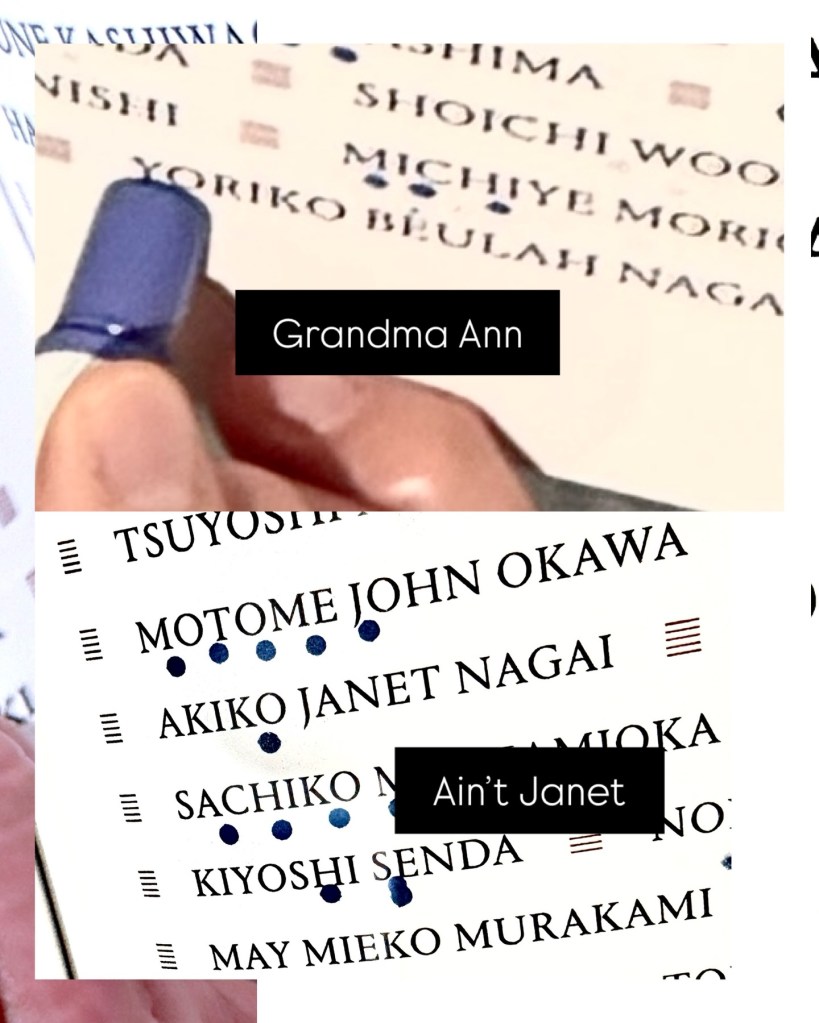
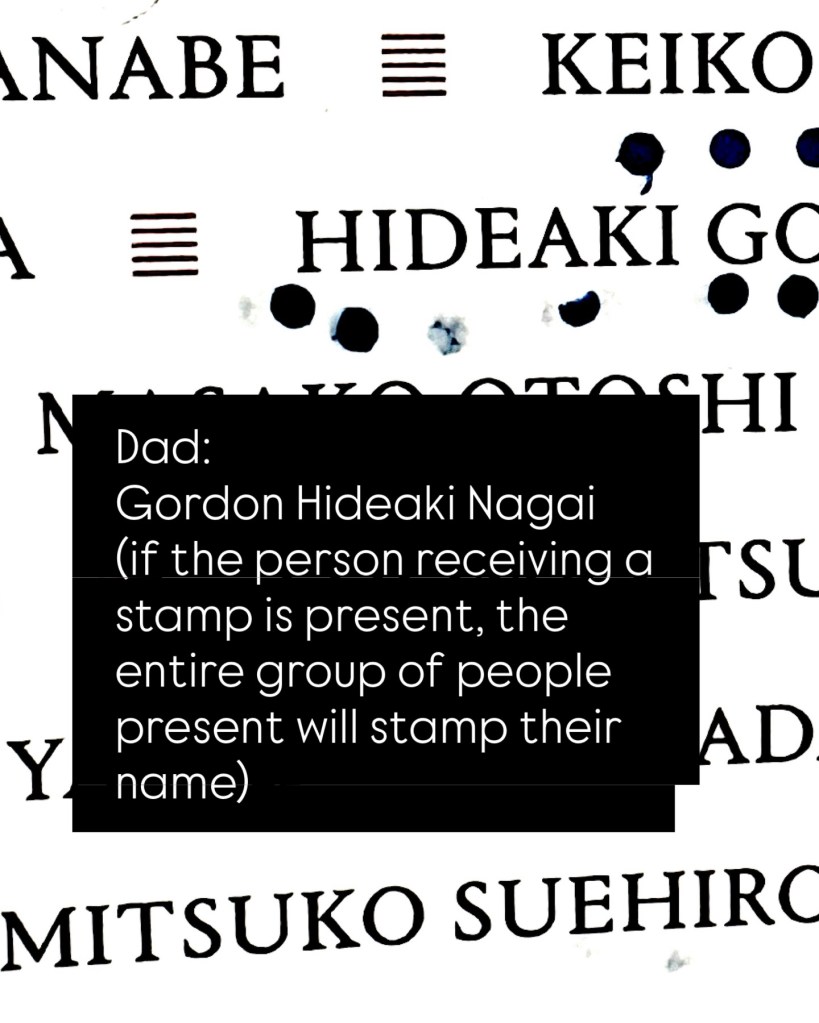
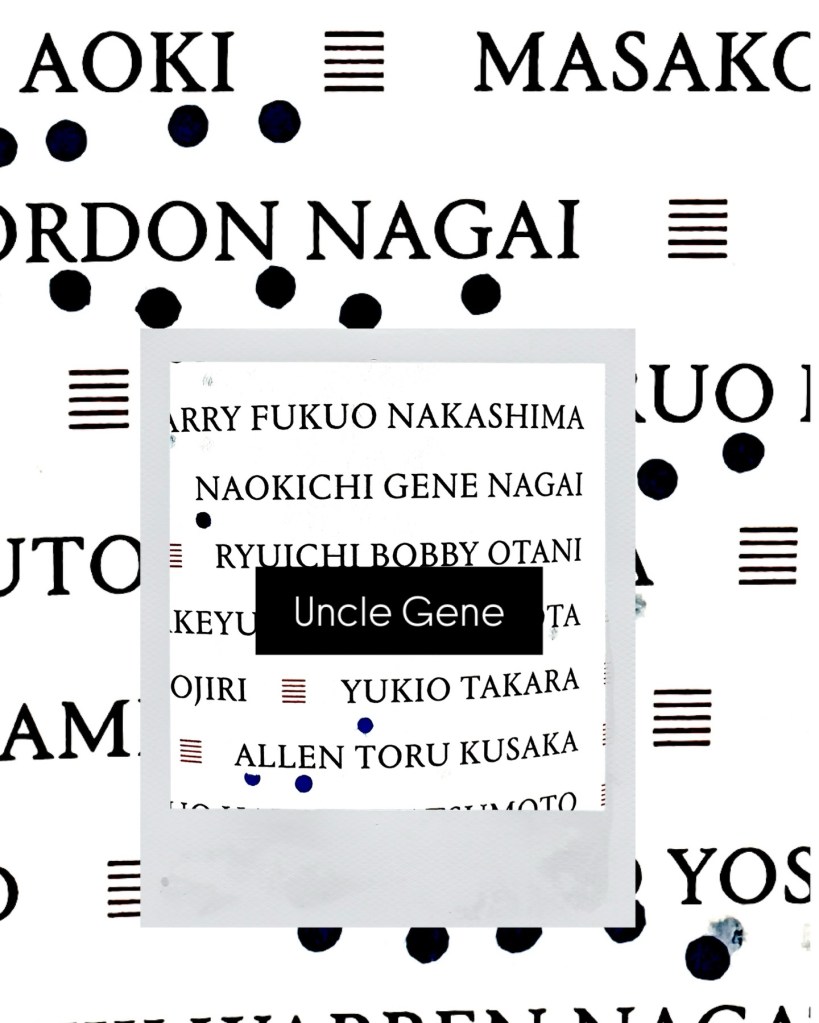
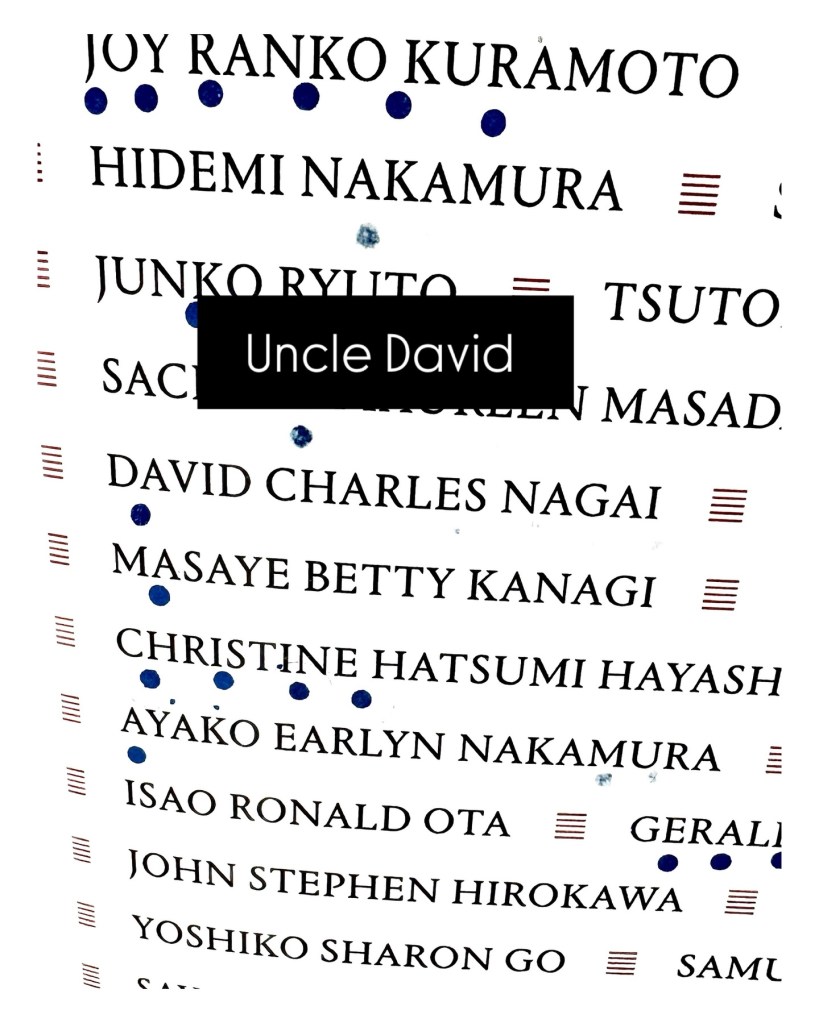
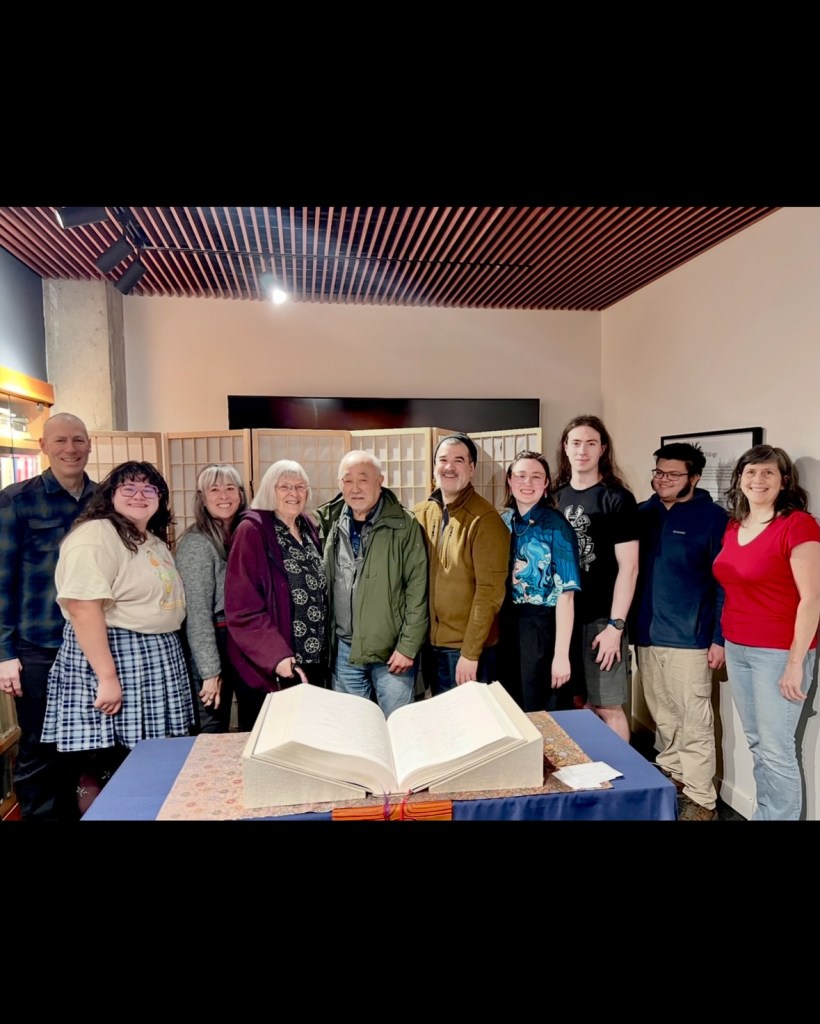
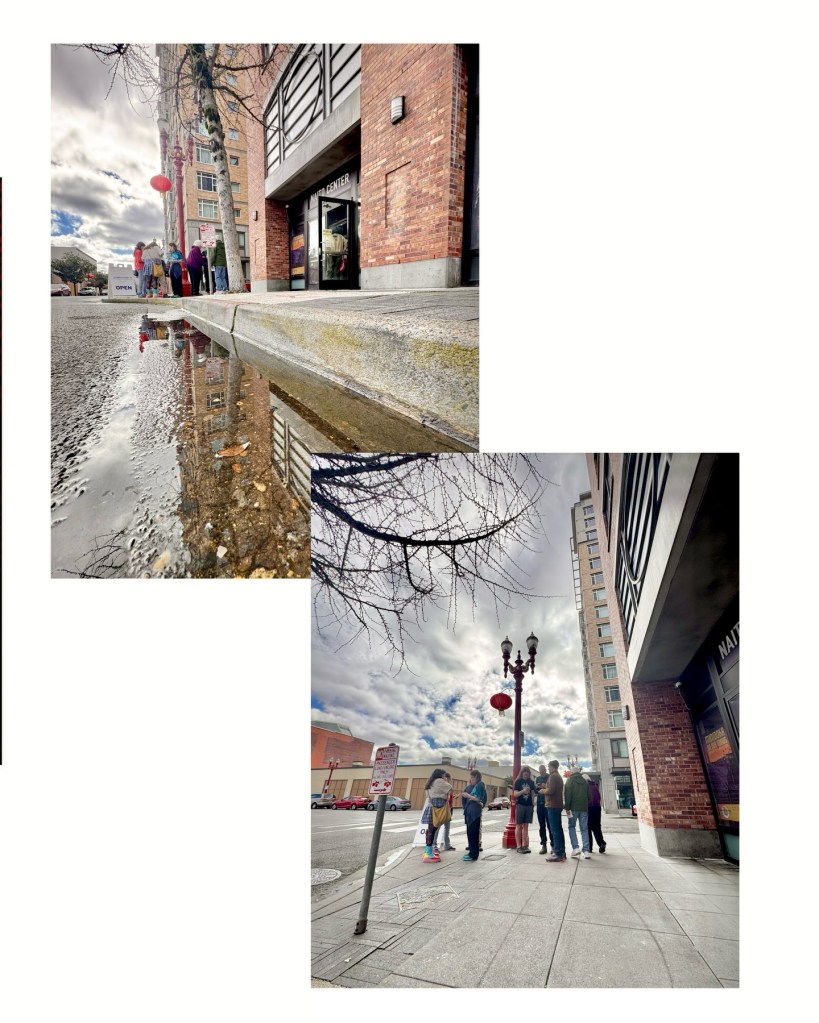
On Saturday, March 7th my family in Eugene and in Bend made the trek to the Japanese American Museum of Oregon in Portland for the special exhibit of the Ireicho Book Project. There we were scheduled to view the names of the Nagai family and those of my Uncle George Miyake’s family all of whom had been in the War Relocation Authority concentration camp, Camp Amache during World War II. The objective was to formally acknowledge each person with a stamp under their name who had been behind barbed wire during that time.
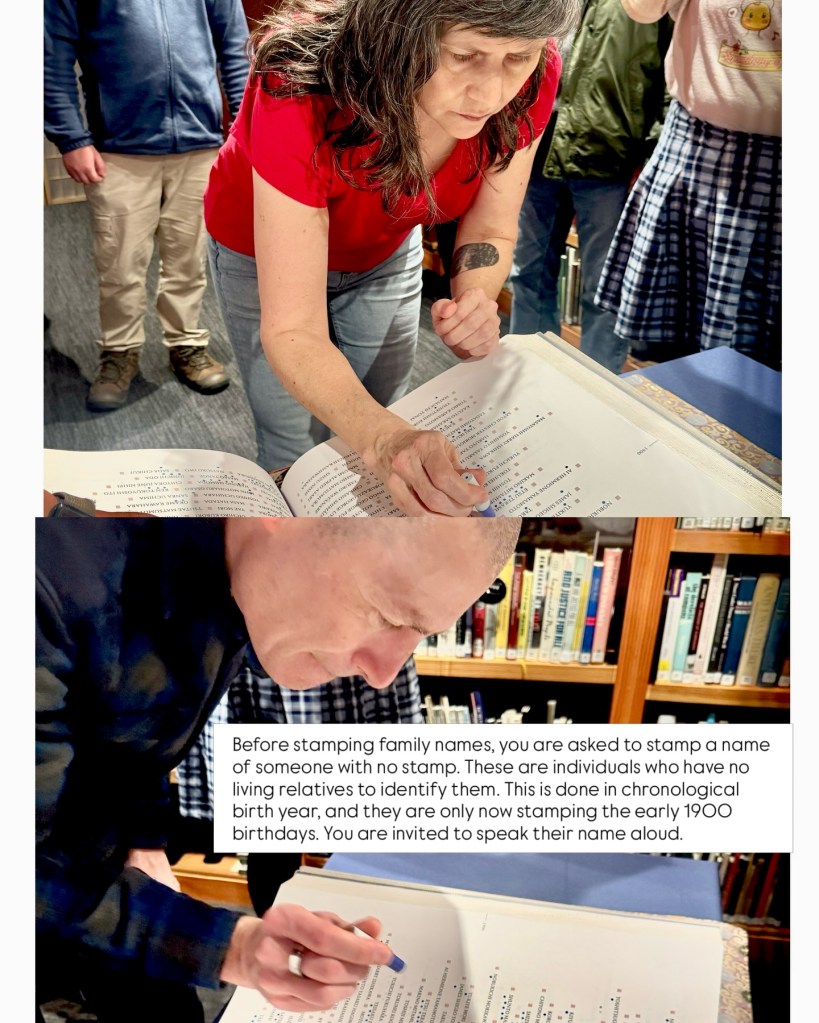
Before addressing the names of my family members we had come to acknowledge, everyone in our party was asked to stamp the name of someone who had as yet not been tagged, this so they would be remembered even though anonymously for all history. (This was such a nice gesture…!)
The exhibit, called the Ireicho Project, involved extensive research efforts to establish for certain each single soul who endured this captivity, essentially to say, “We know you were there!” The research included records and information from the ten War Relocation Authority concentration camps, from the WRA administrative offices, as well as from several federal penitentiaries, and some additional prison facilities all of whom held persons of Japanese ancestry during the war.
The project was originated and headed by Duncan Ryuken Williams and his wife Sunyoung Lee. The project’s objective is to establish the names of each internee, ensure the correct spelling of their names, and note each person’s birthdate.
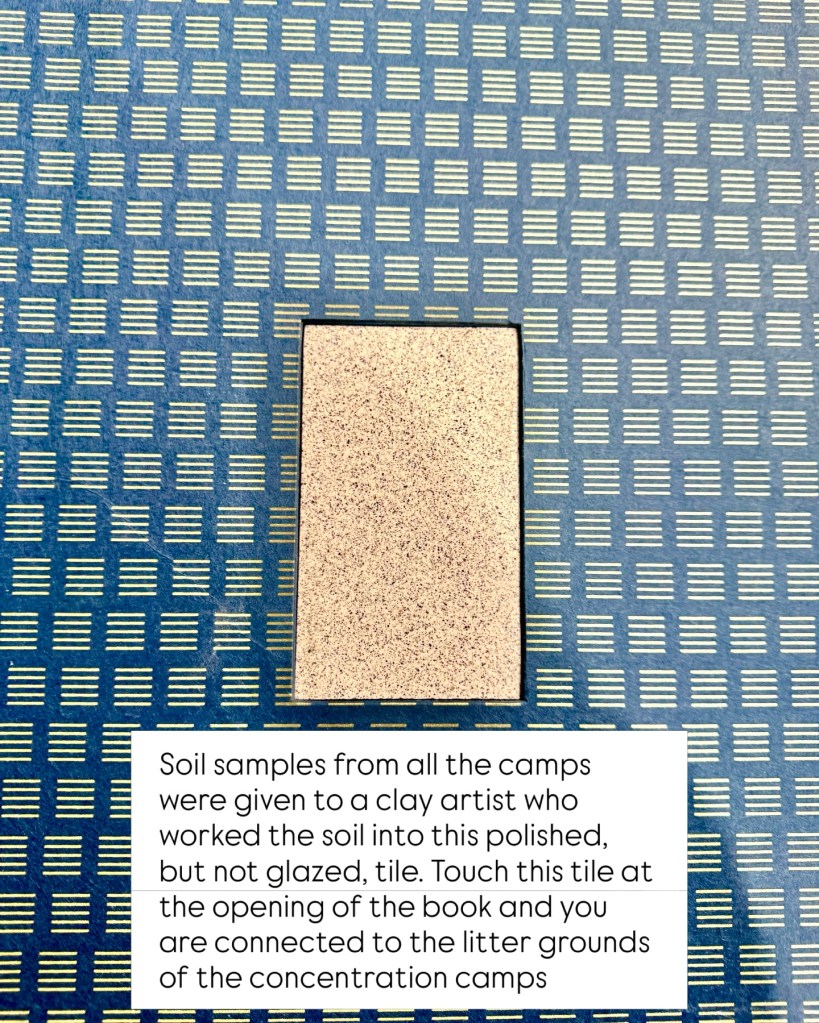
The results of all this research are collected and presented in a formal book that includes some 126,000 names listed by year of birth for our collective history and posterity.
The Ireicho Project has been traveling around the country staying for short periods of time in various places to allow former internees and/or their family members to come to the exhibit and be assisted in finding family names and stamping each name to acknowledge their incarceration in one of the World War II camps.
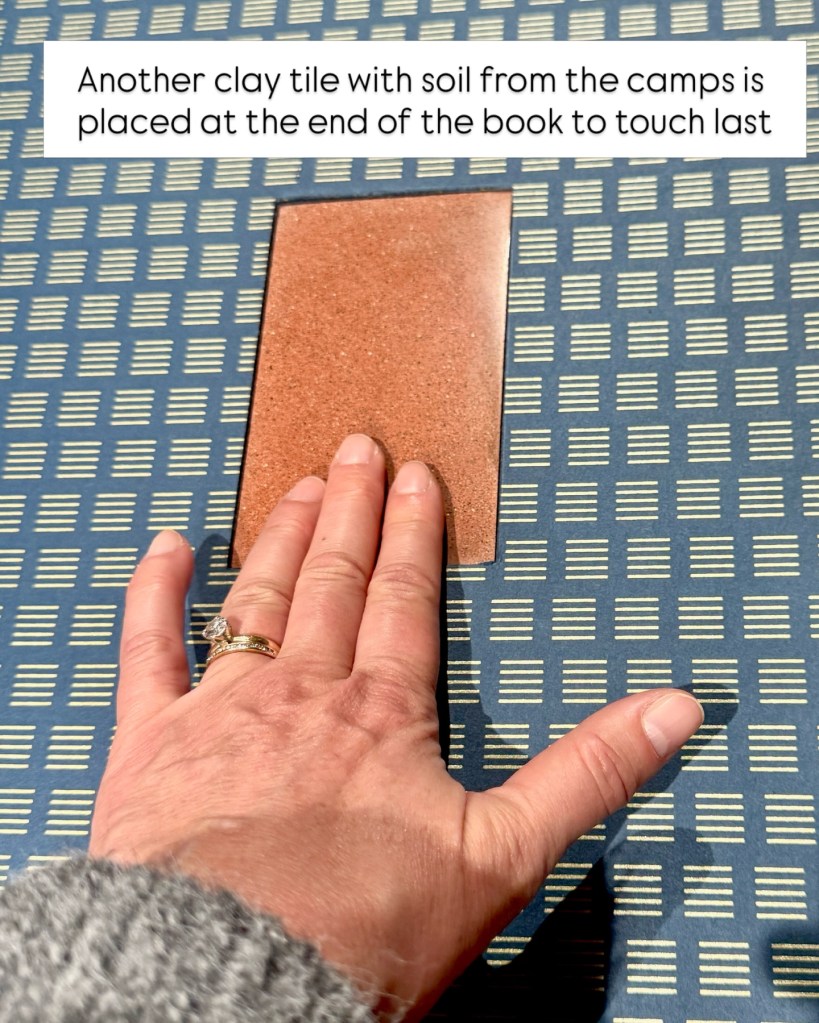
When the tour around the country comes to an end, the book of stamped names will be delivered to the Japanese American National Museum in Los Angeles for permanent display.
Back Story: The Nagai family and my Uncle George Miyake’s family lived outside the town limits of Atwater, California in the middle of the San Joaquin Velley—this is farming country.
When President Roosevelt on February 19, 1942, signed into law Executive Order 9066 authorizing the forced evacuation of all persons of Japanese ancestry from the West Coast, we were initially imprisoned in temporary Assembly Centers on the Merced County Fairgrounds. We would be there from early May ’42 till early August when we would be transported by train under armed guard to the War Relocation Authority concentration camp, Camp Amache near Granada, Colorado near the Kansas border.
We would be at Amache until February ’45 when provisions of Executive Order 9066 were relaxed, and all internees were permitted to leave camp to resume their former lives.
On a personal note, I first learned of the name project from a friend of the family who had seen an announcement and forwarded it to me thinking it would be of interest me, and it was. I applied for a time slot several months in advance of the time of the exhibit to come and stamp the names of my family—I received confirmation of a time and date for March 7th.
As an afterthought, I requested permission to add the names of my Uncle George’s family and was informed the names would be submitted but time would be a factor in whether they could be added for our time slot.
Several days before our visit to the Japanese American Museum I had several episodes of emotions coming up and overwhelming me, but nothing to tell me why or what was moving me—I assumed it had to do with the coming visit and had thoughts of Mom and Dad and some incidents associated with camp, but nothing clearly specific came to mind—but there the emotions were. Then on the drive up to Portland on Saturday there were several times when again emotions came up, but still nothing specific in mind as to why.
Once we arrived at the museum, we were assigned a guide who gave us the back story and history of the Ireicho Book Project. To our good fortune our guide turned out to be Sunyoung Lee, one of the originators of the book project. As she gave us the history and background of the origins of the book project, she touched on many topics that triggered memory traces long buried and I teared up all over again. The day was one of hearing and seeing things on display familiar to me, both because I was there, but because of stories I heard others tell as I made my way along on my journey.
This day was filled with memories for me, mostly good ones with positive feelings associated with them, and some that were mere wisps of time and space hard to decipher clearly—but even these were welcome interlopers as they are a part of me as this dream sequence from the past.
Overall, this was a very good day…






 Journeys of a Bent Mind