 New Year’s Eve, December 1938. Across the globe there are growing rumors of war. Europe is in unrest, the Mediterranean area, a sea of turmoil. In the wide Ottokurss Valley on the Upper Nile, it is another world, eons away, and quiet. The 18 month old archaeological dig at the pyramids of Jherq-Ah-Yem III is proceeding well, and the charismatic leader, Tori Jessica Powell, keeps her team focused on the larger picture of what occurred at the royal tombs three millennia ago: What happened at this one juncture in history, where one courageous slave embracing a defiant symbol of freedom, challenged the most powerful dynasty of the ancient Nile’s long and tortuous history? Why did one lowly slave tackle the mightiest power on earth with the flimsiest of weapons, graffiti? And, how did he get away with it?
After the initial discovery of the royal tombs of Jherq-Ah-Yem III and two members of his high court – Tush-Oh-Mai, little known priest and patron saint of science and mathematics, and Jerq-Ish-Mei, court advisor to the Pharaoh – the Ottokurss team ran into a stone wall, and further discoveries ceased. There was added disappointment in that the team did not find the anticipated treasures of gold, precious and semiprecious gems and stones, or artfully crafted statuary and carved religious relics in any of the chambers.
They were mysteriously absent from all rooms of the massive pyramid. This was most unusual, for there were no signs of forced entry into or sacking of any of the royal tombs. All entryways had been intact, their seals unbroken. Normally with a dig of this magnitude, especially one involving a three-pyramid site, the archaeological team would come across large caches of such treasures throughout the site. The reputation and stature of the Pharaoh would have guaranteed that.
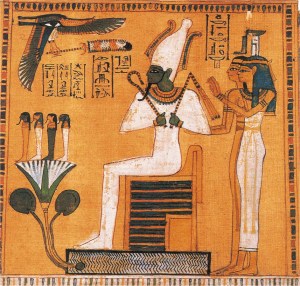
The discovery of a secret antechamber near the royal high tomb, while it caused no little excitement for some time, was more a curiosity amidst these major disappointments. The fact the secret chamber venerated a lowly slave, one of the multitudes of insignificant ants who contributed to the construction of the monument in the name of Jherq-Ah-Yem III, was a puzzlement. Not only was the chamber successfully kept secret from the Pharaoh and all his court, it contained curious alterations in classic and traditional hieroglyphic figures that ridiculed the Pharaoh, all unbeknownst to his royal highness.
Because of the placement of two dark circular disks on the head of Jherq-Ah-Yem III, a clear action of defiance, disrespect, and ridicule, and one likely to bring death if one were caught, the Ottokurss team had dubbed it the “Mickey Mouse chamber.” This piqued the curiosities of Joseph and the rest of his distinguished colleagues in hieroglyphic circles. But for Joseph the most upsetting was not being able to decipher the meaning of the dark circles, for more than his professional reputation was at stake here.
Tori, however, felt the dig met the highest standards of her profession, let alone her personal criteria, and was providing curious and enlightening insights into the Second and Third Dynasties. It was thus against her better judgment that she accepted the invitation to deliver a paper on preliminary findings from the Ottokurss dig to two archaeological societies, The Archaeological Society of Sivornaya (A.S.S.) in the Trans-Caucasian Mountains, and the more prestigious and exclusive body, the Kiev Institute of Studies of Ancient Sub-Saharan Sites (K.I.S.A.S.S.).
Tori hated attending such gatherings of her so-called colleagues because they were so elitist, and were generally critical of her characteristic style and approach in team archaeology. However, she delighted at every opportunity to thumb her nose at this pompous gathering of boys with their pails and shovels digging in the sandboxes of the world. Her delivery was superb, her slides – taken by Paul Chernov, another favored son of the A.S.S. and K.I.S.A.S.S. brotherhoods – were brilliant, and her discussion of the plots and subplots unfolding as chamber after ante-chamber emerged before the Ottokurss team’s eyes, was entertaining as well as enlightening.
The Ottokurss dig was proving the most notable dream dig since Tutankhamen; mouths figuratively drooled, and envy wrinkled every brow in the midst. At the end of her prepared lecture, Tori’s colleagues sat in stunned silence, then they rose, reluctantly, first a few, then eventually as a crowd until all were standing, and applauded the Jewel of the Nile, as they had facetiously dubbed her. Tori smiled, but knew the men’s’ responses were more envy than respect, courtesy than honor, and in the morning they would smoke their cigarettes, leave money on the pillow, and this would merely be a standing of one night.
She returned their applause, a twinkle in her eyes and a wry smile on her lips. In the light of her triumph, the train ride back to the tiny Mediterranean port, the long journey by ship, and the final leg of her travels by camel caravan, were most enjoyable and rewarding, and brought her mercifully back to the work she loved, leaving far behind the quips and snippets of a band of boyish diggers of antiquity; she was back home.
The morning after her arrival back at the dig, Joseph Behai, lead hieroglyphologist of the team, was eating breakfast in the main tent, reading a newspaper. When Tori drew back the tent flap and entered, Joseph started and appeared to be stuffing something under the tablecloth. Tori asked what he was hiding. “Nothing!” stammered Joseph, his face blanching. Just then Paul walked in carrying a newspaper, and he, too, slid the paper behind his back. Tori caught his movement out of the corner of her eye, and she looked the two men squarely in the eyes and demanded to know what was going on. “I told you we’d have to show her!” whispered Joseph, and he pulled several slightly crumpled newspapers from under the tablecloth, and handed them sheepishly to her.
In large 72-point type, the London Daily Journal headlines read: “Chef Tori Jessica Powell Cooks Up Mess at Ottokurss…. Distinguished Colleagues Urge Her to Return to the Kitchen!” In the Nairobi Daily News, the headlines read: “Cook T.J. Powell Stews In Own Juice – Can’t Find Dessert In The Desert!” Tori’s mouth broadened into a wide smile, her blue-green eyes fixed on the headlines.
“Are there more?” she asked without rancor. Joseph looked pained, and said there were, and he pulled a small stack of newspapers out from under his tool kit. “Mickey Mouse Dig Team Unable to Decipher Mouse Droppings!” blared one. “Walt Disney Considering Theme Park Around Third Dynasty Pyramids!” shouted another. “Mousy Archaeologist Gets Tail Caught in Desert Rat Trap!” sneered a third. None mentioned Tori’s lecture, or the responses of her colleagues. Tori smiled and chuckled: “The boys are trying so hard, aren’t they?” She turned to Joseph: “Don’t let it bother you. Their opinions about what we’re doing here aren’t important.” Paul rested his hand on Joseph’s shoulder, and said, “She’s right, you know.” Joseph looked up into Tori’s blue-green eyes, and agreed: “You’re right.”
Just before dusk, Joseph was back in the “Mickey Mouse chamber,” working on several selected photographic plates of the ceiling text. He was still frustrated by several enigmatic and stubborn hieroglyphs. It was as if the author was thumbing his nose at him down through the ancient corridors of time. Joseph was sitting on the floor, his back resting against the south wall, his hands absently fumbling with some pebbles on the floor. As he focused on the far wall letting images of hieroglyphs tumble across the valleys of his mind, he registered that his fingers were rubbing across something on the floor, something in the floor pattern itself. He lowered his gaze between his spread legs, and saw a thin layer of dust covering the floor of the room. Their initial entrance into the chamber had stirred the dust, but it had quickly settled again.
Joseph rubbed the floor, and then pulled out his whisk broom and quickly swept the tiles in front of him. One tile after another emerged from under the layer of dust, and Joseph could see markings on each tile. The floor held yet another ancient message. Joseph recognized the cuneiform imprints on the clay floor tiles.
“Omigawd!” In all the excitement of the golden encoding on the ceiling, they had failed to see the imprints at their feet. His heart leaped, and he scrambled up and out of the chamber, yelling at the top of his lungs for Tori and Paul. When he had calmed down enough to describe what he had found, the three rushed back into the dusty antechamber.
Paul was the only member of the team able to read the cuneiform markings. During one long weekend prior to taking his graduate entrance exams, out of sheer boredom and as a lark, he learned to translate cuneiform from the period of the Second Dynasty. He subsequently wrote his graduate thesis on an early archaeological error in translating cuneiform, one of which the K.I.S.A.S.S. brotherhood had been oblivious until it was brought to their attention by his graduate thesis: from the Second Dynasty, early accounting systems made use of the abacus for accuracy, and accountants, as we would describe them, were called “bead counters.” This was erroneously translated as “bean counters” by Marcus Miwhard, a rather careless and aging Australian archaeologist, in 1934, and none since was any the wiser. In spite of the brilliance of his thesis, Paul’s elucidation of this error failed to sway the conservative K.I.S.A.S.S. executive board, who subsequently moved to block publication of his paper, and thus people working with numbers to this day are referred to as “bean counters.”
It took Paul no time at all to decipher the lengthy, sometimes confused, cuneiform text. The record described how a small band of slaves led by an irascible rebel, had colluded against the Pharaoh and the high court, in the process robbing the royal coffers of all of the regal treasure. The band had organized the delivery of the Pharaoh’s treasures from the royal palace in large baskets, and once each load of gold and jewels was checked by the bead counters, the slaves carried the full baskets into the pyramid’s inner sanctum. Those same baskets, each with a false bottom, were then used to carry the very same treasure, now hidden, back out and away.
Large enclosed coffers constructed along the walls of each chamber, gave the mistaken appearance that each room was the repository of a portion of the royal treasure. None of the treasure ever saw the dark of night in the pyramid, but instead was carried to secret places in the countryside, from whence it was covertly returned to the poor across the country. The documents of the royal bead counters record the royal tombs full of palace treasures, but the band of slaves appear to have had the final laugh on the Pharaoh.
The three walked out into the balmy evening. Paul took his hastily scribbled notes and reported his translations of the cuneiform tiles to Tori and Joseph. As the story of the rebellion unfolded, Joseph nodded, and with clenched fist, said, “Yes!” Tori looked beyond Paul’s shoulder at the silhouette of the main pyramid, its western face toward the setting sun, the last solar rays painting its edges a burnt orange. “You’ve wanted to know who the nameless man was who stole from the Pharaoh, and gave to the poor…” started Paul. “His name was Reuben Hodh…”


 Journeys of a Bent Mind