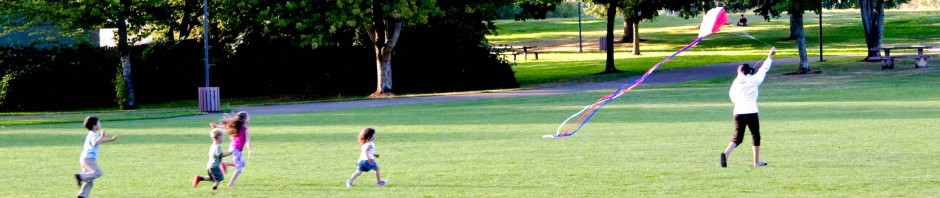
 Childhood is a precious and wonder-filled time. Our experience of it was fresh and unfettered by the whims of the mind, and we were able to launch ourselves into the realms of daydreams, make-believe, and fantasy. When I was a child the pace of life, even in the larger cities, was slower then today’s craziness. Where I grew up there were fields and orchards to walk barefoot in, feeling the cool earth between your toes; barbed-wire fences placed there to divide and protect, but which were challenges to climb through hoping you wouldn’t get caught on the upper strand; fields of alfalfa you could run hell-bent through, and once spent fall down in with your face to the cerulean skies and feel the pain of the air entering and exiting your lungs. And on those mornings when the farmer mowed his field you were drenched in the aroma of freshly mown alfalfa, and there’s nothing in the world that matches that smell.
There was Miss Taylor, fourth grade, a motherly type who taught me the power of books; and Mr. Kirby, my fifth grade teacher who planted the seeds of music in my heart. There were those games of marbles in big circles drawn in the dirt in a time when school playgrounds were allowed to have yards without macadam. There I am knuckling down with my favorite periwinkle in my hands, with the admonition of the principal ringing in my ears not to play for keeps under the penalty of some terrible punishment. There were those restless summer nights under a thin sheet awaiting sleep to overtake me, listening to the wail of a steam engine in the distant darkness; and those early pre-dawn mornings lying in bed, looking out through the east-facing window waiting for the sky to light up from the nuclear bomb tests in the Nevada desert.
When we are stretched beyond our reach by life’s happenings, we often are tempted to pull out all the stops and in the process grasp at measures that in our more serene collected moments we wouldn’t choose because they go against our own self-interests. In those times especially it behooves us to reach down deep within and instead pull out gems from our past, lessons learned, and answers that heal. Then is the time to remember rightly, because it’s a matter of survival. In the face of such important choices, there is something to be said for nostalgia as a good thing, especially about things from our childhood.
Nostalgia is funny in a way – the way it colors our remembrances with a fuzzy glow so we have to look hard sometimes for the realty in it all. When events and people are seen through the soft-focus lens of hindsight it gives them a kinder edge, smoothes out some of the wrinkles, and tempers the sometimes harsh view we hold of those experiences, of certain people, and of our selves. It wouldn’t be to hold onto unreality or anything false, but to retain the best even in the worst of our experiences and the worst of the people who may have wronged us. Not a simple task, that, but worth it if we can muster that as our response. Many of our childhood memory traces sport elements that can serve the function of healing wounds. There is an ancient proverb that goes something like this: Carry forward the flame from the altar of the past, but leave the ashes. That’s a good learning for all of life – It is…


 Journeys of a Bent Mind