 I was born of immigrants parents in a small farming community in the San Joaquin Valley of California. The year was 1938, and my sister was six years old when I arrived. I had two other sisters before me, but one died in childbirth and the second died of complications shortly after she was born. On one scale I was the fourth child, but as it worked out I was considered the second-born. I didn’t learn that until I was grown. Almost two years later, my younger brother was born. We were a family of five.
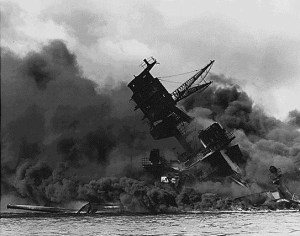
The time leading up to Pearl Harbor seemed tranquil for the country. The harsh winds of war were already blowing across Europe, and tensions between the United States and Japan had been heating up for several years. Here in our homeland, particularly on the West Coast, things were quiet. As a four-year-old I knew nothing of any of this. I didn’t notice we looked different from others at church. I didn’t know what Japanese was, or Japan.
I have no memory traces of Pearl Harbor, or how December 7th played out in our home that Sunday and after. Nothing much changed for me because Mom and Dad buried everything from the two of us youngest. Janet was 10. She had to know what was going on, about the war with Japan, and what being Japanese meant now. She knew the whispered conversations meant something. I’m aure Mom and Dad soothed her anxieties and warded off her nightmares. In doing this they covered over their own feelings, and they did it to keep us safe in the soft cocoon of childhood. That was by design, something I believe all parent did at the time. I was four-years-old. I knew nothing.
In May of 1942 we were forcibly removed from our home to a temporary “assembly center,” a barbed-wire enclosed section of the Merced County Fair Grounds. Emergency military-style barracks were built to house all Japanese from northern California until more formal permanent housing was completed in locations away from the West Coast. As it turned out, our concentration camp was to be in southeastern Colorado near the town of Granada called Camp Amache. But, that was yet to come.
Life in the assembly center was unsettling because everyone had moved from single-family homes to communal living. While families had their own living space, meals were now in collective mess halls, and bathroom and shower facilities in central buildings without individual stalls. We moved from the comforts of home, to life under military order.
My memory traces of life in the assembly center are like those of Pearl Harbor, nothing. I learned later that our home was an animal stall in a large pavilion used for show animals during the county fair. There were no walls, only a low fence five feet high of slats providing no privacy from the family in the next stall. There were several metal Army cots with gunny sacks filled with straw for mattresses. This was our home through the summer with days of temperature in triple-digits. The heat raised the stench of animal manure throughout the pavilion. Life was hard for everyone. I was four years old and have no recollections.
In early August we traveled by train from Merced to Granada, Colorado to our new home. There was an armed soldier in each of the train’s cars to ensure security. The concentration camp was named Camp Amache, named after the American Indian wife of a prominent farmer after whom the county was named.
Being in camp began with life simple and innocent as it had been before for me. The war was over there and wasn’t a presence in my experiences. But, I was now with other kids my age, and slowly began to learn things Mom and Dad had been trying to keep from me: like being Japanese. All of a sudden I noticed everyone had straight black hair, and an awful lot of them spoke in a language I didn’t understand. And, everyone looked really different from the soldiers in the guard towers, and teachers in classes.
Grownups talked about Pearl Harbor, but I didn’t know what that was, except they said something bad happened there. I got confused because they talked about Japanese attacking Pearl Harbor, but weren’t we Japanese? And, I learned that when some people came to camp they were forced to come by soldiers with rifles with bayonets. A lot of them lost everything. I learned much later some of our friends kept our home for us so we didn’t lose everything, and when the war is over we will have a home to go back to. Which we did.
I started school in camp, and began to learn more than what Mom and Dad were comfortable with. I learned the regular subjects like math and reading, but I also started hearing about the war in Europe and in the Pacific. There were stories about something called Nazis in Europe, and Japanese in the islands in the Pacific, about a lot of American soldiers dying. Mom and Dad didn’t want things like that talked about in the home, so I didn’t ask. My teachers talked about the war, and some of the older kids told stories they’d heard from grownups. I wanted to talk with Mom and Dad about them, but I couldn’t.
In 1943 some law was changed and now men from camp could volunteer for the Army. Up until that time they couldn’t join the military because they were considered to be enemy aliens. In fact, we all were. I dint know what that meant until my teacher explained it to the class.
Uncle George volunteered for an all-Japanese American combat unit and left for training camp in Mississippi. Daddy wasn’t allowed to join because he wasn’t a U.S. citizen, but he was later allowed to volunteer to work someplace in Nebraska where he worked on a farm because all the farmers were off fighting the war in Europe. Being a farmer, he felt useful, but more he felt he was serving his country.
All through 1943 and 1944 we all learned what it meant to live really close to others. There was no privacy, really. Our meals were in the mess hall where it was impossible to eat a meal just as family. Using the bathrooms and showers was hard because there were no individual stalls and everything was out in the open. This was both embarrassing and disgusting. I never got used to it, and neither did the grownups, especially the women and girls.
In early 1945 things in the war against Germany were going well for our side, and battles in the Pacific against Japan were also going our way. The government decided it would be okay for families to leave camp and return home. Mom and Dad decided it was time for us to go home, and we left camp in April of that year.
When our train pulled into the station in Merced we were met by the three men who had held our farm for us during the war. They had known Mom and Dad for 10 years before the war, and one had gone to high school with Mom even before that. Their friendship and open support was a big reason most in the community welcomed us home all right. It helped too, that Mom and Dad had become friends with all the farmers in and around Atwater who they’d known from ten years before the war.
My first memory of school when we were back home was of a large old house about five miles from our home at Arena Corners. There were only two buildings around there, one the old school house, and a small grocery store at the corners.
I don’t have much in the way of images of this school, only that there were two large rooms in the middle of the house with very high ceilings. One room was for grades 1 through 4, the other for grades 5 through 8. I think we were there only two weeks, when we transferred to Mitchell Elementary School in Atwater proper, which was actually closer to our home, and was a regular school with eight separate grades.
By this time, I was six years old, and well aware of the war with Japan, and why we had been “away” for three years. Now, being one of five cousins with “slant eyes,” in what was an otherwise white school, I rose every morning anxious about what I would face that day.
We were out in the country two miles due west on Bell Drive, and to catch the bus to school we had to get from home to the corner at Applegate Road. We walked or skated, and when we skated we left our skates in a large wooden mailbox attached to the side of this woman’s house, who had given us permission to do that. The bus took us the final mile to school. At the end of the school day the bus dropped us off there and we walked or skated home.
Mom and Dad told us that Japanese children in other communities up and down the West Coast had really bad treatment for being Japanese after the war. They were called names, sometimes roughed up and hit, and teased. We were told this might happen to us, that our teachers would be there to protect us, but we would need to be strong. So it was that we started school.
After all that warning and the buildup, nothing happened. No name calling, no attacks, no teasing. The only unusual thing that first day was the silence in the room and stares as I entered and Miss Peck introduced me to the rest of the class. Nothing happened, at least right away. It wasn’t until first recess, when some of the kids came up and we shared names. This happened with all of the cousins, making for a smooth and uneventful transition to our new life in school.
Many years later I learned that the superintendent and the principal of Mitchell Elementary School District, and all of the teachers had agreed to set a welcome for us that would ensure nothing bad happened to mar our return to the community. It worked. It may have happened in other communities as well, and I hoped so but it did happen in Atwater.
Living on a farm there are what I think of as normal chores that children all over assume, but as a farmer’s child there are those added ones that come around especially during harvest time. We had Alberta freestone peaches, Thompson seedless grapes, and Non-Pareil soft-shell almonds, and summers were filled with hard work.
When I was eight years old Dad taught me to drive the tractor-trailer. One of my first jobs driving was to deliver empty boxes to where the pickers were working, and later to haul the full ones out of the orchard. Dad hired migrant workers for all this work, most to be paid for piece-work to pick the fruit, and several to work hourly for such things as delivering empty boxes and hauling out full ones. I was the designated driver.
When I was twelve Dad trained me to drive our tractor-trailer semi-truck. This was a WWII converted Army personnel carrier that had the back removed and a fifth-wheel and semi-trailer attached. Dad had it painted bright orange, a theme he carried over to all his hand tools the handles of which he painted orange as well.
By nature’s timeline, peach harvest came first from late May to mid-June. As the pickers worked picking the fruit, and as they filled the boxes, my job was to stack them beside the row for later pickup. I later drove the semi-tractor-trailer while workers stacked the fruit-filled boxes onto pallets on the trailer, which Dad then drove in to the packing shed in town. When I was 15 Dad let me drive the loads in to the fruit exchange by myself
We were paid for our fruit by the pound, which the weigh-master determined by weighing the tractor-trailer at the weigh station with a full load of fruit, and subtracting the weight of the tractor-trailer unloaded.
The next crop was our grapes – about mid-July they were ripe for picking. The job for me initially was to lay out stacks of thin paper “trays,” 24” x 36” for the cutters to lay the grapes out in the sun. Cutters slit grapes from the vine into a bucket on a strap over their shoulder, and when full it was just enough when spread onto the tray to fill it, corner-to- corner. Left out in the sun, the moisture was sapped out of them and they were magically transformed into raisins. In between driving the tractor-trailer, I spend time cutting grapes along with the migrant workers. By the end of July, the raisins were ready to be boxed and hauled out and workers emptied each tray into boxes the same as those we used for the peaches. Like the peaches, we hauled the raisins out and transported them to the fruit exchange.
Our final crop was our almonds. Harvest started around mid-August. Almonds initially grow with a soft grey-green outer covering, lightly fuzzy, that protects the growing nut. In the heat of the summer sun, the outer covering dries, splits open, and drops off leaving the nut in its shell still on the branch. The harvest involves knocking the nuts off the tree and gathering them up for transport. For this we had an “almond boat,” a low-sided trailer 12 inches deep some 22 feet long with a canvas rig on one side. Two canvas sheets, 10’ x 18,’ were affixed to a wooden bar stretching the length of the boat. The trailer is stopped next to the tree, workers pull the two sheets spread out beneath the tree, and use rubber mallets like baseball bats to hit each branch, knocking the dried almonds free onto the canvas. Others use 10-foot bamboo poles with a short piece of rubber garden hose on the end, knocking the stubborn ones from the tree. They then roll the canvas up, emptying the sheets full of almonds into the boat. When the boat was full, the almonds were shoveled into large gunny sacks and sewn shut for later delivery to the fruit exchange. The thing I most remember about this work is the breaks we took mid-morning and at mid-afternoon, during those 100-degree days. Someone used a long kitchen knife and split open a couple of sweet watermelons, and everyone ate slices in whatever shade we could find. It was hard work in the middle of very hot days, but we were treated to these sweet moments.
Life in school was pretty nice. With all the fears of what might happen to us, nothing much turned out bad at all. The only problems, which weren’t really problems, were just kid stuff, and they happened between all kinds of kids. We were never singled out or targeted. My best friend was Don Thornhill. Very smart, really good looking with blond hair and blue eyes, a favorite among the girls, and a real jokester. Another friend was Anthony Roan, a tall lanky Mexican, who was the best athlete in school. He had really long legs, and was the fastest of all kids on the playground. I had other friends, but Don and Anthony were my closest buddies. All the girls in my class were friendly, but none I considered best of friends.
When I was in the 6th grade I began thinking about girls some, well, because there they were. But as there were only two Japanese girls in school, one being my older sister Janet, the other my cousin Peggy, I didn’t have anyone I could consider dating because there was this race thing. Actually, I didn’t spend much time thinking about girls, really, because I was a very young 12-year old, quite innocent, and pretty much naïve in the way of girls. And I was scared.
All of this changed very dramatically in the 7th grade when a girl asked if I would go to a friend’s birthday party with her. I was 12 years old. I was shocked, embarrassed, fear-struck, tongue-tied, but underneath It all, pleased to be asked. Mind you, this was 1950, just 5 years after the war, and Virginia, a white girl, was asking me to go to a party with her.
Being totally unprepared for any of this, I didn’t know if I was supposed to pick her up for the party, or if she was to pick me up because she was the one who asked. Turned out simply solved when she said she’d meet me at the party. At the time, I was relieved, because I wouldn’t have to meet her parents. I wouldn’t know how to act or what to say. Of course, we were all just 12 years old, so everyone would be driven by parents anyway. Years later, the thought occurred to me she met me at the party maybe because she hadn’t mentioned to her parents who she was going to the party with. It was only 5 years after the war. I never did figure that one out.
Well, my memory is somewhat fuzzy about the party. I have the sense that we played Pin the Tail on the Donkey, Spin the Bottle, and Post Office, among others. I think. This game of Pin the Tail on the Donkey was rather tame of the ones we played that day. Anyway, it was what it was.
At age 12, though, it was quite racy and daring for Spin the Bottle and Post Office. Either you were embarrassed to admit it if you had ever played either, or if you had, you didn’t necessarily boast about who you’d kissed. Teasing was always fair game, and the blush a dead give-away.
The thing about Spin the Bottle, the spinner really had no control over who ended up being the “spinee.” The birthday girl made it clear that a girl didn’t have to kiss a girl, or a boy kiss a boy. As I remember there were nervous giggles from the girls, and solemn nods from the boys. There were six and six of us at the party, and I don’t remember clearly, but I think I kissed more than my date. I have a vague memory we were in a circle on the floor in the living room, and when the bottle stopped, the spinner and lucky one leaned out into the circle and brushed lips. It was over rather quickly.
Post Office, on the other hand, was the more daring of the games we played. It seemed everyone knew how it was played, except me. What happened was when birthday girl as the postmaster called out that someone had mail, that someone went with the sender out to the hall closet, stepped inside and closed the door, and planted a kiss there in the dark. I vaguely remember that everyone received more than one letter, and from various others. I wish I remembered this more clearly.
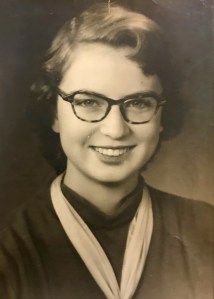 Well, the party eventually ended, and everyone left for home, picked up by parents. Virginia thanked me for coming to the party with her, and left with her parents. Next Monday, she wasn’t in school. Birthday girl came up and explained that she had left the day after the party on Sunday for Germany. Her dad was an Army Air Corps captain who was stationed at Castle Air Force Base north of town, and had been reassigned to an airbase in Germany. Virginia wouldn’t be back. A year later, I received an eighth-grade graduation picture of her from an American school in Germany, signed on the back, “Love Virginia.” My love life was short-lived, but it was my first kiss.


 Journeys of a Bent Mind