 The history of Japanese on the West Coast following the war is replete with sad and horrific tales of prejudice, racism, and persecution. Many lived through hell from some who had been close neighbors before the war, but who turned after the attack on Pearl Harbor. Many never returned to their former communities because of the hostility of local residents.
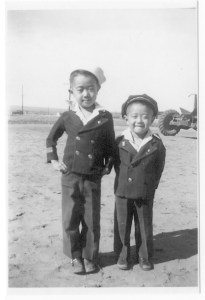
The tale of my family’s return to Atwater, California, however, was different by a country mile. It was absent the anger and hatred met by many others all up and down the western border of the country. I was 6 years old, my sister 12, my younger brother not quite 5, and the baby of the family was only 3.
In school, my sister renewed friendships from before the war, and life for her returned to somewhat normal. And for me, I met many who would become close friends over the years. This was an age when children were obedient to their elders, and it was a rare instance when one deviated and caused trouble that brought the attention of a teacher. It was a time of pure innocence, even with racial elements coming out of the war. I don’t have any memories of my classmates calling me names, or in any way exhibiting racist things against me. Life for me was idyllic and safe.
There are a number of reasons for why this was so. My parents had been farmers in the Atwater community since 1931, the ten years leading up to Pearl Harbor. They were active in the agricultural associations in the community, and were friends with all the local farmers. While this was true for many Japanese farmers on the West Coast, all having been in communities for 30-40 years, it all washed away in most communities with the bombing of Pearl Harbor. Added was the factor there was residual antagonism against them as a result of the earlier success of Chinese immigrants on the West Coast, and xenophobic reactions built on that hatred. This was not a part of community reactions in Atwater. Most farmers in Atwater maintained their friendships with Mom and Dad.
A second element that undergirded this friendship, was the relationships they had with three of the most powerful men in the community, the president of the Bank of America, a judge who sat on the municipal court, and the owner of the largest farm in the area. After Pearl Harbor and before evacuation these three men formally purchased our farm for the sum of $1.00, held our property during the war, and on our return home, sold it back to us for the same sum. Everyone in town knew these men were friends of the family, and most respected and acknowledged that friendship.
A third thing that mitigated a negative reception for my family on our return was the decision made by the superintendent of the school district, supported by the principal of the elementary school, and all the teachers, to stand in support of the five Japanese cousins returning from the concentration camp. This was in April of ’45, just before the closing of the ’44-’45 school year. I don’t know how this was affected in classrooms and on the playground, but it was apparently made clear to the students that nothing untoward was to happen to any of us. I remember the kids starting with my first-grade class with Ms. Peck being friendly and including of me in their activities. This wasn’t feigned, it was because we were all innocent and basically good, and hadn’t been taught to hate. This was not so in many other communities among children my age. In Atwater it was different.
By the time I graduated from the eighth grade in ’52, seven years after the war, there was nothing at all that was a bother to me – I was just one of the boys, and friends with everyone. As I got older, I learned of the many tragic episodes experienced by so many of the children my age in other communities, and in a way I couldn’t identify with them because of my experiences in Atwater. I consider my life as a child very fortunate, and appreciate those relationships – Really, very fortunate.


 Journeys of a Bent Mind