No one knows with any certainty how language started in the dawn of human life. Primitive humans probably grunted a lot and gesticulated to convey what was on their minds. Before the evolution of elaborate throat muscles and vocal chords speech wasn’t possible, and any lengthy conversation wasn’t going to appear for a very long time. The upside of this lack was there wasn’t any ‘”nagging,” but it must have taken years to master the meaning of three grunts. Early humans must have at some point started noticing tonal qualities of their grunts. When they had a cold, their grunts came across raspy. Women’s grunts had a higher pitch, as did young children. When boy’s voices started to change, it would have been noticeable to any discerning and budding linguist. Throughout all this time don’t you wonder what came out of the mouth of the person who stubbed his toe? How many grunts and in what tone did they curse? Was there even cursing? Did volume reflect the intensity of one’s emotions? Was a whispered grunt a term of endearment?
Communication with another human is one of the more sophisticated things that happened for us as humans. Within a small and circumscribed region, the tone and inflection of grunts became more and more familiar as language developed, and things shared in community could be identified and decisions made. Vocabulary would slowly have grown to include growls, hisses, sucking in of breath and sighs and eventually morphed into a variety of sounds that became what we would call “words.” I wonder when the raised eyebrow emerged to punctuate the meaning of various utterances.
As groups of families as tribes began to roam outside their familiar lands into landscapes beyond the horizon, they must have encountered other tribes of families. How long did it take in these encounters before communication was established? How many generations of inter-marrying did it take to move beyond the initial language barriers? Was the mother-in-law typically hated then as well?
Today infants learn language by total immersion, effectively from birth. There are some circles that believe the human sounds “heard” by the fetus in utero begins that process of inculcating language. Within a year after birth some have learned a handful of words and make correct associations. “Mama” comes very early no doubt because of her ever presence from the start. Thus, begins the process of humanizing the creature.
Eventually words become crucial in the life of an individual. To grow from crying as the sole means of communicating one’s needs to speaking in complex sentences to communicate ideas is indeed a marvel. For many achieving this level is sufficient to carry the day, and for many a year. But for a special group of self-styled linguists words are more than just communication. They are keys to a world of the abnormal, to fields unbounded, and to the headwaters of things wild and ingenious. To this “Band of Bothers” words open realms the source of inspiration and dreams.
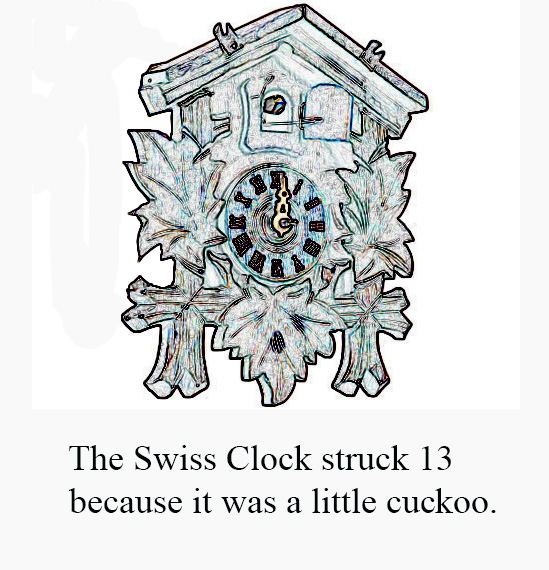
This is where “puns” come into the picture. A deft play on words is masterful; it is at once a reflection of intelligence and childhood playfulness in a delicious mixture to tickle one’s fancy. The jokes in this book started out for me as a lark on a social media site and became a wild brainstorming of possible alternative views of our world. My mind dwells in this realm much of the time. I love the power of words. I enjoy sweet memory traces stirred by a single word that opens the now dusty corridors of my inner past. I love playing with the words in the daily Jumble in the local paper.
So, I trust your trekking through the pages of this volume, third in the series, will provide you with some delight, and in a word the defining moment of your day.


 Journeys of a Bent Mind